 ultimate-guide
Passing Driving Test on First Try: 7 Proven Tips
Table of Contents
- Why First-Time Passes Are Achievable
- Understanding What Examiners Assess
- How Many Driving Lessons Before Test Day
- Mock Driving Test: Building Test Readiness
- Driving Test Mistakes to Avoid
- Your Driving Test Checklist for Test Day
- Managing Nerves and Anxiety on Test Day
- What to Do If You Make a Mistake During the Test
- Frequently Asked Questions
Last Updated: October 18, 2026
Why First-Time Passes Are Achievable
Passing driving test on first try tips work best when you understand one thing: the practical test rewards consistency, not perfection. At M&A Drive School, we help learners drive predictably and recover calmly when something goes wrong. The DVSA guidance for learner drivers sets out exactly what examiners look for, and it is far narrower than most learners assume.
The single most useful mindset shift is this: a driving test is an assessment of safe driving over roughly 40 minutes, not a performance. You are not being scored on charm or flawless execution. You are being scored on whether you can drive independently without prompting and without creating danger. That is achievable for most learners who prepare systematically.
Understanding What Examiners Assess
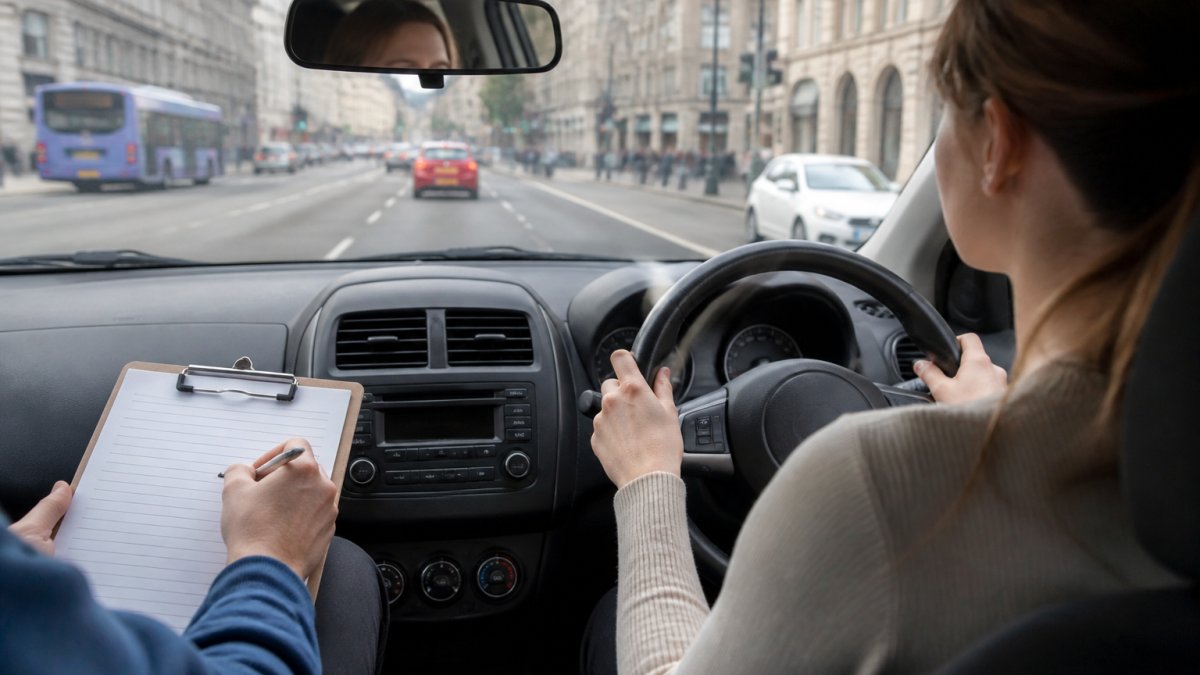
Understanding the driving assessment is the foundation of everything else. During the practical test, an examiner sits beside you and records faults across a set of competencies: moving off, use of mirrors, signalling, junctions, road positioning, speed control, observation, and independent driving. Faults are graded as driving faults (minor), serious faults, or dangerous faults. You can accumulate minor faults and still pass.
Serious and Dangerous Faults Explained
A serious fault is something that had the potential to cause danger. A dangerous fault is one that actually created danger. Both end the test.
The official DVSA car driving test guidance confirms that independent driving forms a substantial part of the test, including following sat-nav directions. Practise driving without step-by-step instruction so this section feels routine rather than alarming.
How Many Driving Lessons Before Test Day
There is no fixed number of driving lessons that guarantees readiness, and any provider quoting an exact figure is guessing. What matters is whether you can drive independently, handle a range of road types, and complete manoeuvres without prompting.
A practical way to judge readiness: can you complete a full drive with junctions, roundabouts, and at least one manoeuvre while an instructor stays silent? If you still need reminders about mirror checks or positioning, you are not ready.
Mock Driving Test: Building Test Readiness
A mock driving test is a full-length, examiner-style assessment run by your instructor under test conditions. It is the closest thing to the real experience, and it exposes the gaps that ordinary lessons hide. Treat a mock seriously: no prompts, no coaching mid-drive, and a proper debrief afterwards.
How to Use Mock Results Effectively
Do not fixate on the overall score. Look at the pattern of faults. If mirror checks slip when you are concentrating on junctions, that is a habit to drill, not a one-off error. Use the mock to build test readiness by repeating the specific scenarios that caught you out. Two or three mocks spread across the final weeks usually reveal more than any single lesson.
| Mock result pattern | What it usually means | What to do next |
|---|---|---|
| Repeated observation faults | Rushed decisions at junctions | Slow approach, deliberate mirror and blind-spot checks |
| Positioning errors | Poor lane discipline | Practise on familiar roads with clear markings |
| Manoeuvre hesitation | Low confidence, not low skill | Repeat the manoeuvre until it feels routine |
| Speed control issues | Reading the road too late | Scan further ahead, adjust earlier |
Driving Test Mistakes to Avoid
The driving test mistakes to avoid are rarely dramatic. Most failures come from small, repeated lapses: forgetting a blind-spot check, signalling too late, or drifting over a lane line. A common mistake is treating the test as a performance and over-correcting, which creates new faults. Another is rushing at junctions to appear decisive. Examiners reward deliberate, safe decisions, not speed.
Other frequent slips include poor speed control in residential areas, incomplete mirror checks before changing direction, and hesitating so long at a junction that you hold up traffic. Each is fixable with targeted practice.
Your Driving Test Checklist for Test Day
A driving test checklist removes avoidable stress, but the most useful version is not a single list, it is a timeline. The final week and test day have distinct jobs, and mixing them up is how learners arrive either over-tired or under-prepared. Below is a practical schedule you can adapt, followed by the documents and vehicle checks that cause the most last-minute problems.
The Final Week: A Day-by-Day Plan
- Seven days out: Run a full mock test with your instructor under exam conditions. Note the pattern of faults, not the total score. Book one more lesson for the middle of the week to drill the specific scenarios that caught you out.
- Five days out: Review manoeuvres, bay park, parallel park, pull up on the right and reverse, and forward park. Practise each at least once in the car you will use for the test, not a different vehicle.
- Test day morning: Eat a proper breakfast, arrive at the test centre with time to spare, and use a short warm-up lesson to settle in rather than to learn anything new. The DVSA advice on preparing for the driving test is worth a read so nothing about the format surprises you.
Documents and Vehicle Checks
Before you leave, confirm you have your provisional driving licence and your theory test pass certificate. The car must be taxed, insured, have a current MOT where applicable, and be in a roadworthy condition, clean enough for the examiner to see out of, with working lights, indicators, tyres above the legal tread depth, and sufficient fuel.
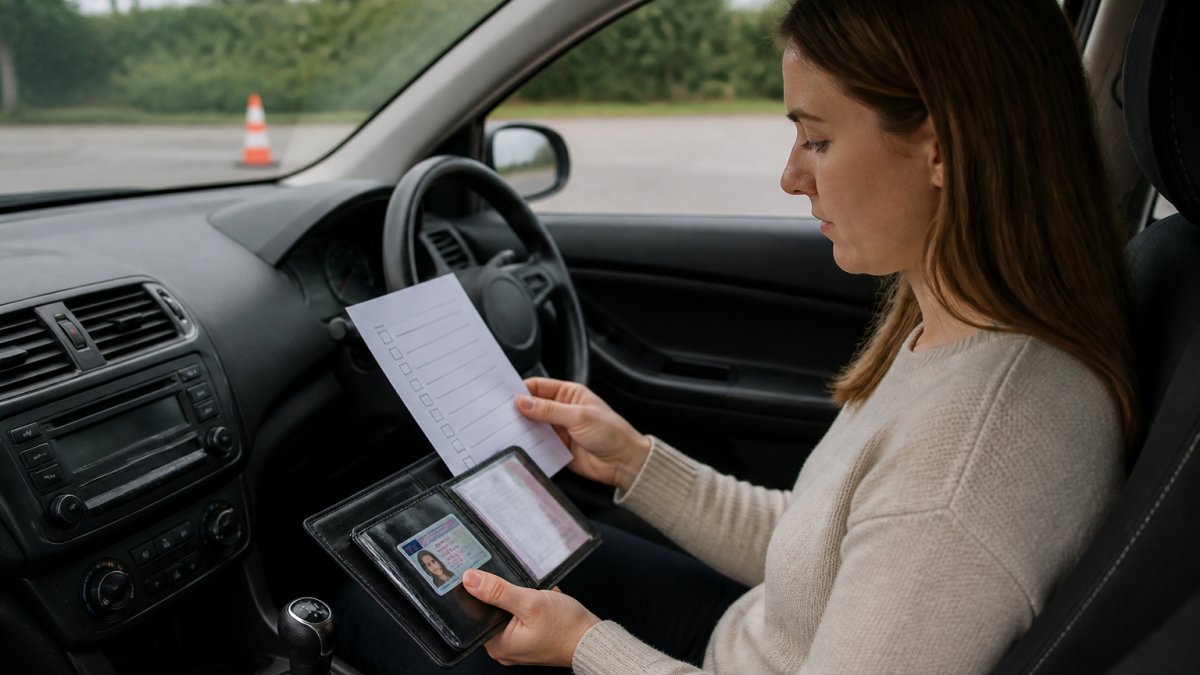
- Provisional licence and theory pass certificate packed
- Test booking time and centre address confirmed
- Instructor's car checked: tyres, lights, mirrors, fuel, clean windows
Managing Nerves and Anxiety on Test Day
Test anxiety is normal, and it does not have to decide the outcome. The nerves that make your hands shake are the same ones that sharpen your attention. But generic advice to "stay calm" is not enough for learners whose anxiety is severe, or who have a disability, health condition, or language need that affects how they take in instructions.
Practical Techniques That Work
- Sleep and food: A late night of cramming the day before reliably makes performance worse. Go to bed at your normal time, eat a proper breakfast, and avoid too much caffeine if you are already jittery.
- Breathing before you set off: Slow, steady breathing, in for a count of four, out for a count of six, lowers your heart rate before the examiner gets in. Do it in the waiting room, not at the wheel.
- Exposure, not avoidance: If specific roads or roundabouts make you anxious, tell your instructor beforehand. A patient instructor can build exposure gradually rather than throwing you in on test day. At M&A Drive School, learners often tell us that a calm, encouraging instructor made the difference. Zainab described her instructor as "very calm and encouraging" and credited that support with helping her pass.
Reasonable Adjustments and Accessibility
If you have a disability, health condition, or additional need, the practical test can be adapted. The DVSA guidance on reasonable adjustments for the driving test sets out the available support, which can include extra time, a sign language interpreter, or other adjustments agreed in advance.
Anxiety itself is not usually a barrier to taking the test, but if it is severe or linked to a diagnosed condition, it is worth discussing with your instructor and, where relevant, your GP.
What to Do If You Make a Mistake During the Test
If you make a mistake during the test, keep driving safely and do not assume you have failed. Many learners pass with minor faults. The examiner is watching how you recover, not whether you are flawless. Correct the error calmly, continue with full observation, and let the rest of the drive speak for itself. Panicking after a small slip is what turns a minor fault into a serious one.
Frequently Asked Questions
How can I increase my chances of passing my driving test first time?
The strongest route to passing driving test first time is consistent practice with a qualified instructor, combined with a mock driving test in the weeks before. Review your serious and dangerous faults after each lesson, practise the manoeuvres you find hardest, and build familiarity with local test routes. On the day, arrive early, complete your vehicle checks, and treat the test as a normal drive. A systematic approach with reflection on each lesson can help you spot patterns in your mistakes.
How many driving lessons should I have before my test?
There is no fixed number, but most learners benefit from regular lessons spread over several months rather than cramming. The right time to book is when you can drive independently, handle junctions and roundabouts without prompting, and complete manoeuvres consistently. Your instructor's feedback is the best guide: if they say you are test-ready, book. Rushing to a test before you are consistently safe usually leads to a retest, which costs more in the long run.
What are the most common reasons people fail a driving test?
The most frequent failures come from serious or dangerous faults in observation and judgement. Junction observation, mirror checks before signalling, speed control, and road positioning account for many failed attempts. Manoeuvres such as parallel parking and bay parking also catch learners out. Many faults come from nerves rather than lack of skill, which is why a mock driving test and a calm test-day routine matter. Reviewing your driving test mistakes to avoid before booking helps you target the areas that cost passes.
What should I do the day before my driving test?
Keep it low-key. Have a short lesson beforehand if your instructor recommends it, but avoid cramming. Check your driving test checklist: provisional licence, theory test pass certificate, and confirmation of your appointment. Get a good night's sleep, eat properly, and plan your journey to arrive at the test centre early. Avoid last-minute practice on unfamiliar roads. A relaxed, familiar routine the day before helps you manage nerves and arrive ready to drive normally.
How can I stay calm during my driving test?
Nerves are normal, and examiners expect them. Slow your breathing before you set off, keep your speed steady, and talk yourself through each observation out loud if it helps. Focus on the drive itself rather than the outcome. If you make a mistake, acknowledge it briefly and continue; examiners assess the whole drive, not one moment. Regular practice and a mock driving test reduce anxiety by making the real test feel familiar. Many learners find a short lesson beforehand settles them.
What manoeuvres should I practise before my driving test?
Practise every manoeuvre your examiner could ask for: parallel parking, bay parking, pulling up on the right and reversing, and forward bay parking. Also practise hill starts, three-point turns where relevant, and emergency stops. Consistency matters more than perfection. Run each manoeuvre several times in different conditions and locations. Your instructor can tell you which ones need more work, and a mock driving test will reveal any you are still shaky on.
What happens during a practical driving test?
The test lasts around 40 minutes. You complete an eyesight check, answer two vehicle safety questions, then drive with independent driving for about 20 minutes, often following sat-nav directions. You will complete one manoeuvre and possibly an emergency stop. The examiner records minor faults and any serious or dangerous faults. You are allowed up to 15 minor faults and still pass, but any serious or dangerous fault results in a fail. The examiner gives feedback at the end.