 blog
Five ways to improve clutch control for beginners
Last Updated: November 19, 2026
Quick Summary
To improve clutch control, find the bite point first by raising the clutch slowly until the engine note drops and the car creeps forward. Then release the clutch gently, add a small amount of accelerator as it engages, use the handbrake on hills, and repeat short, frequent practice sessions.
- The bite point is when the clutch plates start to connect and the car begins to creep forward.
- Rushing the clutch release is the most common beginner mistake and causes stalling and jerky movement.
- Add a small amount of power as the clutch engages to smooth the start and avoid over-revving.
- Use the handbrake on hills and release it only once the car feels like it wants to move.
- Clutch control is muscle memory, so short, frequent practice beats one long session.
Table of Contents
- Five ways to improve clutch control for beginners
- How to find the clutch bite point
- Clutch control exercises for beginners
- Five ways to improve clutch control for beginners
- Common beginner mistakes
- When to get professional instruction in Aberdeen
- Frequently Asked Questions
Five ways to improve clutch control for beginners
Clutch control is the skill of using the clutch pedal to manage how much engine power reaches the wheels, and it is the part of manual driving that beginners in Aberdeen find hardest. This guide from M&A Drive School sets out five practical ways to improve it.
How to find the clutch bite point
The clutch bite point is the moment the clutch plates start to connect and the car begins to creep forward, the foundation of all clutch control.
Park on flat, quiet ground with the engine running, press the clutch fully down, select first gear, release the handbrake, then raise the clutch slowly until the engine note drops slightly. Hold the pedal there and feel the car creep.
That small drop in engine sound and the gentle forward movement is the bite point. Learners anxious about stalling benefit from instructors experienced with nervous learners, who talk them through the sensation calmly.
Clutch control exercises for beginners
- Bite point hold: hold the car still on a slope using clutch alone for a few seconds.
- Creep and stop: move off, creep a few metres, then clutch and brake to stop. Repeat ten times.
- Slow race: creep as slowly as possible along a quiet road without stalling.
- Stop-start drill: move off and stop at set points to mimic traffic lights.
- Hill hold: use the handbrake, find the bite point, release the handbrake and move off without rollback.
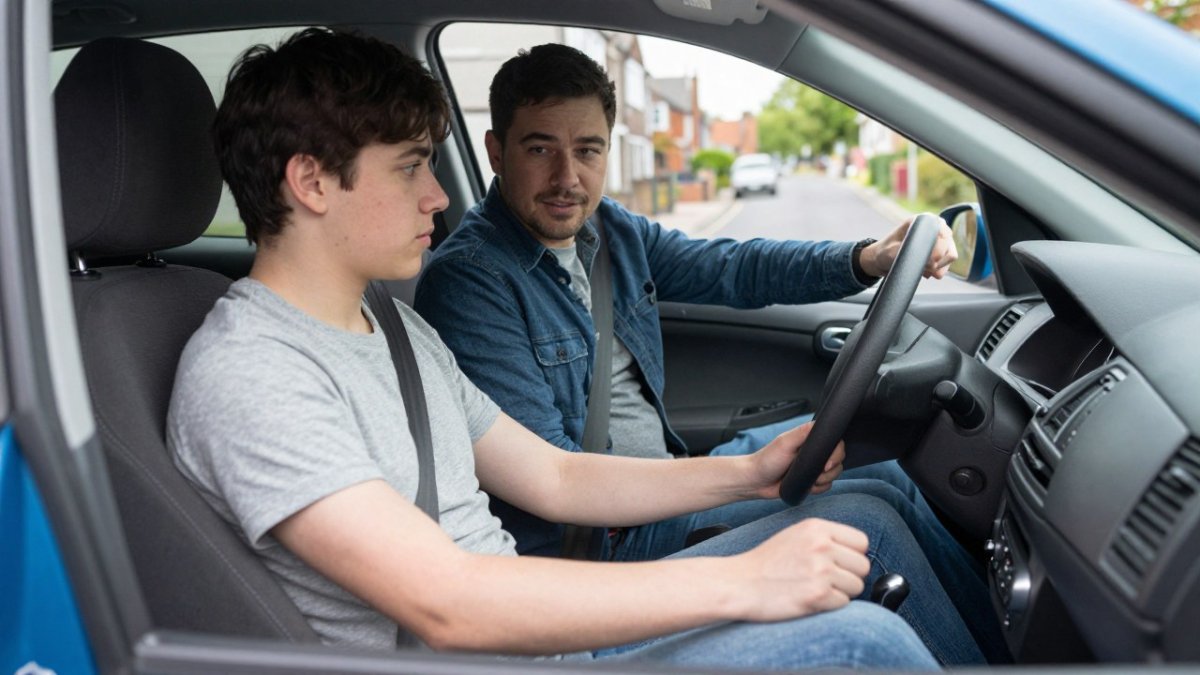
Learners practising in busy streets can find guidance on taking lessons in the city centre, where traffic adds useful difficulty once the basics are solid.
Five ways to improve clutch control for beginners
1. Find the bite point first. Every move-off starts with locating it, before touching the accelerator.
2. Release the clutch slowly. A gentle pedal movement prevents jerky movement and stalling. Rushing the release is the most common beginner mistake.
3. Coordinate with the accelerator. Add a small amount of power as the clutch engages. This smooths the start and avoids over-revving.
4. Use the handbrake on hills. It prevents rollback while the clutch bites. Release it only once the car feels like it wants to move.
5. Repeat, repeat, repeat. Clutch control is muscle memory. Short, frequent practice beats one long session.
A beginner struggling with the basics can follow a practical route to learning manual driving in Aberdeen, while a structured lesson plan for beginners builds clutch and other core skills step by step. Most learners find clutch control takes several lessons to feel natural, and that is normal.
Common beginner mistakes
- Releasing the clutch too fast. This causes stalling and jerky movement.
- Riding the clutch. Resting a foot on the pedal wears the clutch out faster.
- Over-revving. Too much accelerator before the bite point makes the car lurch.
- Looking at the pedals. Feel and engine sound matter more than sight.
- Skipping the quiet-area practice. Busy traffic is the wrong place to learn the basics.
Watch out: holding the car on a hill using only the clutch can cause clutch wear over time. Use the handbrake for longer waits.
Here are the mistakes beginners make most often and how to correct each one.
| Mistake | Cause | Fix |
|---|---|---|
| Releasing the clutch too fast | Rushing the pedal movement | Release the clutch slowly and gently |
| Riding the clutch | Resting a foot on the pedal | Keep the foot off the pedal between changes |
| Over-revving | Too much accelerator before the bite point | Add a small amount of power as the clutch engages |
| Looking at the pedals | Relying on sight | Use feel and engine sound instead |
| Skipping quiet-area practice | Learning in busy traffic too soon | Build basics on flat, quiet ground first |
When to get professional instruction in Aberdeen
Clutch control improves fastest with a patient instructor who can correct small errors before they become habits.
M&A Drive School offers manual and automatic lessons in Aberdeen, with a systematic teaching approach that includes reflection journals. Instructors are patient and encouraging, and learners can request a female instructor. The flexible booking system helps lessons fit around study or work.
The school holds a 4.9 rating from 194 reviews.
Clutch control is a skill, not a talent, and it responds well to structured practice with the right guidance. M&A Drive School combines manual and automatic instruction, a systematic teaching approach with reflection journals, and patient instructors who work at a learner's pace. Get started with M&A Drive School and book a lesson to build clutch confidence on Aberdeen roads.
Frequently Asked Questions
How do beginners improve clutch control?
Improvement comes from repetition in a quiet area, not from longer drives. Practise finding the bite point with the handbrake on, then move off and stop repeatedly in first gear. Keep pedal movements slow and gentle so your foot learns the friction point through feel and engine sound. Short, focused sessions of 15 to 20 minutes beat hour-long drives where you stall once and lose confidence.
Why does a car stall when you lift the clutch?
A stall happens when the clutch engages faster than the engine can cope with. Lifting the pedal too quickly, or releasing it without enough accelerator, drops the engine revs below the point where it can keep turning. The fix is to pause at the biting point for a second or two, add a little accelerator, then release slowly. Stalling is normal for beginners and is not a sign you cannot drive.
How do you use clutch control on a hill?
On a hill, the handbrake is your friend. Bring the clutch to the biting point until you feel the car pull slightly, add accelerator, then release the handbrake smoothly. This prevents rollback and takes pressure off the clutch. Once moving, release the pedal fully so the clutch is not partly engaged for long periods. Practise on a gentle slope before trying anything steeper.