 Ultimate guide
Best Way to Learn Manual Driving in Aberdeen
Quick Summary
The best way to learn manual driving is with a structured, step-by-step plan that builds skills in order, starting with the controls and the biting point before moving to gear changes and hill starts. Learners who master foundations first progress faster and feel more confident on Aberdeen's roads.
- Learn the three pedals and gear pattern before moving the car.
- Find the biting point repeatedly before attempting to move off.
- Release the clutch in one smooth, continuous movement.
- Use the rev counter alongside engine sound to time gear changes.
- Take regular lessons and practise between them for steadier progress.
Table of Contents
- Why Learning Manual Driving Takes a Structured Approach
- Manual Transmission Basics: Gears, Pedals and Cockpit Layout
- Preparing the Car and Starting Off Safely
- How to Find the Biting Point and Control the Clutch
- Manual Car Clutch Control Tips for Smoother Driving
- Changing Gears, Hill Starts and Stopping
- Manual Driving Lessons for Beginners: What to Expect
- How Long It Takes to Learn to Drive a Manual Car
- Common Problems, Troubleshooting and Choosing Your Next Lesson in Aberdeen
- Frequently Asked Questions
Best Way to Learn Manual Driving in Aberdeen
Last Updated: November 8, 2026
Why Learning Manual Driving Takes a Structured Approach
The best way to learn manual driving is with a structured, step-by-step plan, and most learners who struggle do so because they skip the foundations. A manual car asks you to coordinate a clutch, a gear lever, an accelerator and a brake at the same time, and that coordination is learned in a sequence. Learning to drive a manual is a skill built one layer at a time, not something you pick up by sitting in a car and hoping for the best. For a clear, stepwise path, see beginner-focused structured driving lessons.
In Aberdeen, where traffic moves through roundabouts, hills and busy urban junctions, that sequence matters even more. A learner who can already move off smoothly and stop safely will have far more room to focus on reading the road. M&A Drive School teaches manual and automatic lessons using a systematic approach that builds each skill before the next one is introduced.
This guide walks through the process in the order most learners need it: the controls, preparing the car, the biting point, clutch control, gear changes and hill starts, what to expect from lessons, how long the process typically takes, and how to handle the problems that come up along the way.
Manual Transmission Basics: Gears, Pedals and Cockpit Layout
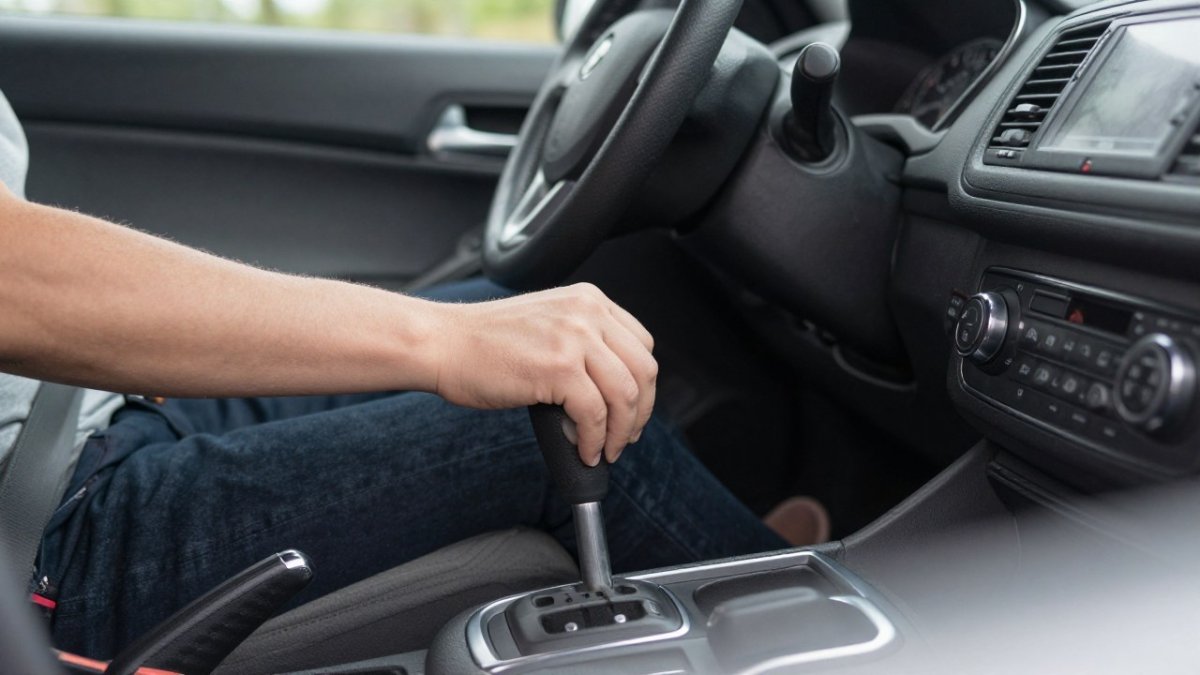
Before you move a car, you need to know what each control does. A manual transmission uses three pedals and a gear lever. The clutch pedal sits on the far left and disconnects the engine from the gearbox when pressed. The brake sits in the middle and the accelerator, sometimes called the gas pedal, sits on the right. The gear lever is between the front seats, and the gear pattern is usually printed on the top of the knob.
Most cars use a gate pattern with first gear at the top left, second gear beneath it, and reverse usually in a separate position that often requires lifting a collar or pressing down before moving the lever. The gears are arranged so that you move the lever in a set pattern rather than in a straight line, which is why learners often find the first few attempts awkward.
Pay attention to the instrument panel as well. The tachometer shows engine speed in revolutions per minute, and it gives you a visual cue for when a gear change is needed. A common mistake is ignoring the rev counter and relying only on the sound of the engine. Learning to read both together speeds up the process considerably.
Modern manual cars can differ in small but important ways, such as the position of the handbrake, the presence of hill-hold assistance or the location of the stop-start button. Check the owner's manual of the specific car you will drive before your first lesson so there are no surprises.
Preparing the Car and Starting Off Safely
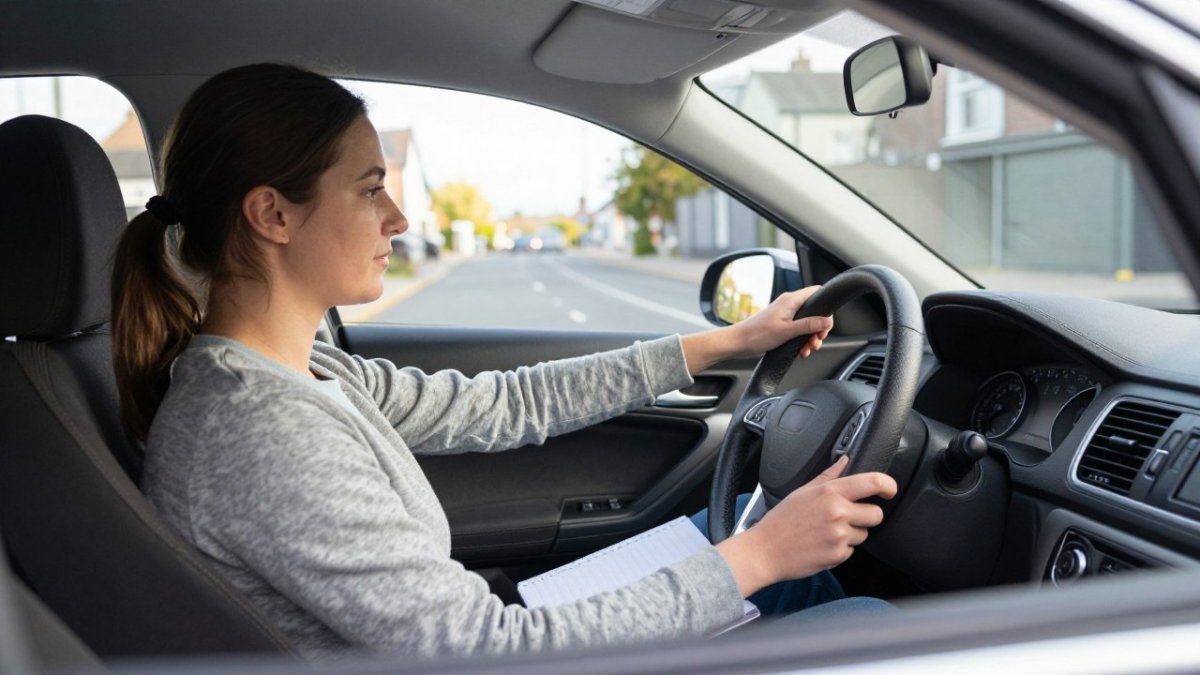
Good preparation makes the first lesson far less stressful. Start by adjusting the seat so that you can press the clutch fully to the floor without straightening your leg completely. Your knees should remain slightly bent, and you should be able to reach the steering wheel comfortably with your arms slightly bent. Adjust the mirrors before you move so that you do not need to look away from the road later.
Before starting the engine, make sure the handbrake is applied, the gear lever is in neutral and the clutch is pressed to the floor. Most manual cars will not start unless the clutch is depressed, and this is a built-in safety feature. Turn the key or press the start button and let the engine settle.
To move off, press the clutch fully, select first gear, and check your mirrors and surroundings. Keep the handbrake on while you find the biting point, then release it as you gently allow the clutch to rise and add a little accelerator. The car should begin to move forward slowly. If the engine stalls, the cause is almost always that the clutch was released too quickly or too little throttle was applied. Stalling is normal in the early stages and is part of learning, not a sign of failure.
Choose a quiet practice area for these first sessions, such as an empty car park or a quiet residential road in daylight. This keeps the focus on the controls rather than on other traffic.
How to Find the Biting Point and Control the Clutch
The biting point, sometimes called the friction point, is the position of the clutch pedal where the clutch plate begins to engage and the car starts to take up the drive. Finding it is the single most important early skill in manual driving, because every smooth start depends on it.
To find it, sit with the car stationary, engine running, handbrake on and first gear selected. Slowly lift the clutch pedal while watching the engine note and listening for a change in pitch. You will feel a point where the car begins to shudder slightly or the engine note drops. That is the biting point. Mark it mentally, then press the clutch back down.
Practise lifting the clutch to that point repeatedly until it becomes familiar. The biting point can shift slightly depending on the temperature of the engine and the condition of the clutch, so a point that worked yesterday may feel different today. This variability is normal and is one reason why regular short practice sessions work better than a single long one.
Once you can find the biting point consistently, the next step is controlling the clutch through it. Hold the car on the biting point using the clutch and accelerator together, then gradually release the handbrake when you are ready to move. Practising this on a gentle slope in a safe location builds confidence quickly.
Manual Car Clutch Control Tips for Smoother Driving
Smooth clutch control comes from a few consistent habits. The first is to release the clutch in one continuous movement rather than in stops and starts. Jerky releases cause the car to lurch and are the most common reason passengers feel uncomfortable during early lessons.
The second habit is to use the accelerator in small, steady amounts. Many learners either press too hard, causing the car to surge, or too little, causing it to stall. Aim for a gentle increase in engine speed as the clutch comes up, rather than a sudden burst.
The third is to avoid resting your foot on the clutch pedal when you are not changing gear. Riding the clutch wears the clutch plate and causes overheating and unnecessary wear. A reliable routine is to keep your left foot flat on the footrest until you need to press the clutch.
Finally, be wary of compensating for one problem with another. A learner who holds the clutch down too long to avoid stalling often finds that the car rolls backwards on a hill or that gear changes become rushed. Address the root cause, which is usually timing and throttle, rather than masking it.
Changing Gears, Hill Starts and Stopping
Changing gears follows a simple sequence: release the accelerator, press the clutch, move the gear lever to the next gear, then release the clutch while applying the accelerator. Changing up is generally done at higher engine speeds, and changing down is done at lower speeds as you slow for junctions or roundabouts.
A useful rule for beginners is to change up when the rev counter reaches around 2,500 rpm in a petrol car and to change down as the speed drops for the corner or junction ahead. Exact figures vary between vehicles, so treat these as starting points and check the manufacturer's guidance for your car.
Hill starts are often the most feared part of learning manual driving. The method is to find the biting point on the slope, use the accelerator to hold the car in place, then release the handbrake as the engine takes the load. Some modern cars include hill-hold assistance, which holds the car briefly after you release the brake, but you should not rely on it until you understand the manual method.
When stopping, bring the car to a gentle halt using the brake, then press the clutch just before the car stops to avoid stalling. Select neutral and keep the clutch pressed or apply the handbrake while waiting at a junction. Select first gear again once you are ready to move.
Manual Driving Lessons for Beginners: What to Expect
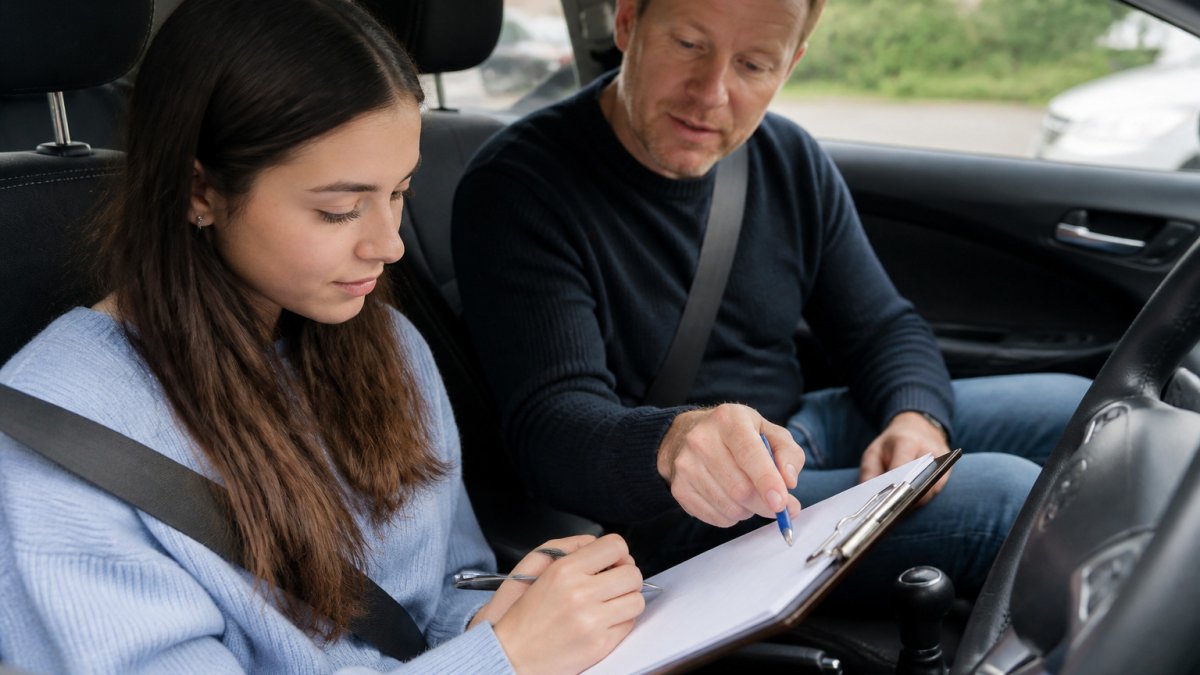
A structured lesson sequence is the difference between random practice and steady progress. A predictable order helps learners build each skill before the next is introduced. The plan below outlines one way lessons can progress; your instructor will adapt the pace to you, and knowing the shape of the journey in advance can make each lesson feel more like a step forward.
Session 1, Cockpit and moving off. The focus is on the controls, the seat and mirror set-up, the biting point, and moving off and stopping on a flat, quiet road. You are not expected to change gear smoothly yet; the goal is to find the biting point repeatedly and to stop without stalling.
Session 2, Clutch control and first gear changes. With the biting point familiar, the lesson adds first-to-second gear changes on a quiet road and introduces steering at low speed. Progress is judged by whether you can move off and change up without looking down at the lever.
Session 3, Junctions and stopping. This session introduces approaching junctions, slowing with the brake and clutch together, and selecting first gear to move off again. The skill being built is the sequence: mirrors, signal, position, speed, look.
Session 4, Hill starts and downhill control. Hills are introduced once flat-ground moving off is reliable. The lesson covers the handbrake method, the biting point on a slope, and the difference between holding the car on the clutch and holding it on the handbrake.
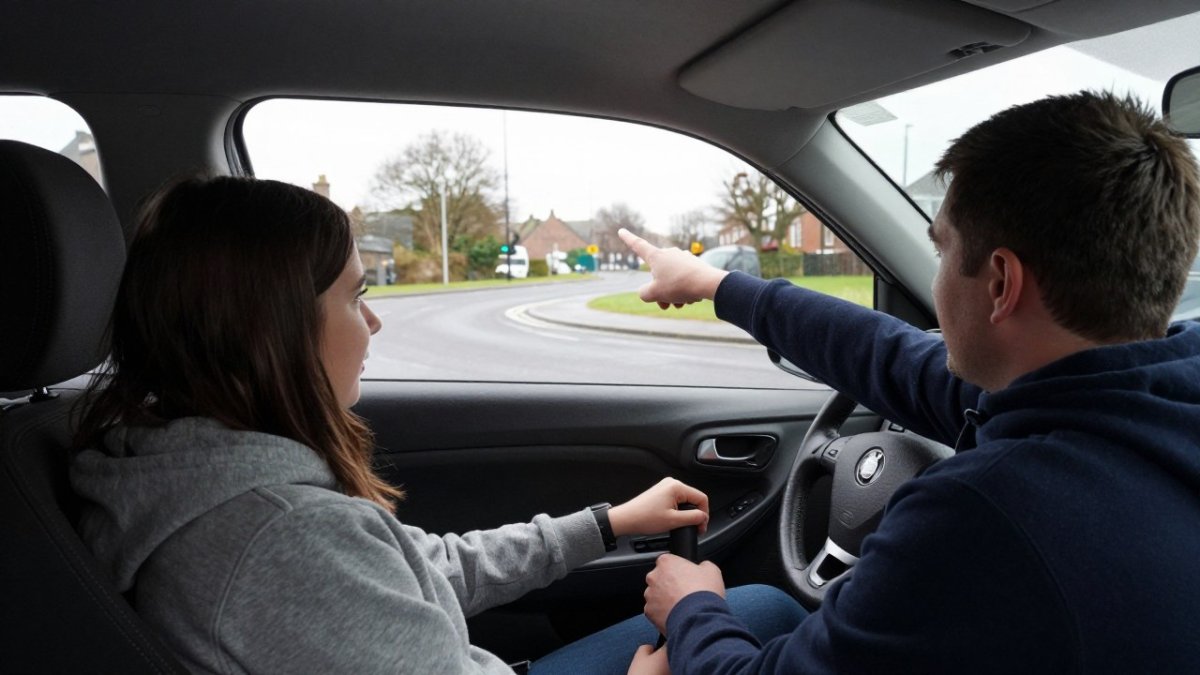
Session 5 onwards, Busier roads, roundabouts and manoeuvres. Only once the car can be moved off, stopped and steered smoothly on quiet roads does the lesson move into traffic. Roundabouts, dual carriageways and the manoeuvres required for the practical test follow in the order your instructor judges best.
A useful rule of thumb is that a skill is ready to build on when you can perform it three times in a row without prompting. Your instructor will track this, and a reflection journal can help you see which skills are solid and which need another session. If you feel uncertain after a lesson, say so at the start of the next one; a good instructor will build in a short refresher before moving on.
Watch out: if you practise between lessons in a different car, the biting point and clutch feel will differ, so allow the first few minutes of each lesson to recalibrate rather than assuming your timing has gone backwards.
For learners in Aberdeen, lesson options depend on the package and frequency you choose, so confirm current options directly with M&A Drive School when you book. The important thing is to keep the sessions regular and to let each skill settle before adding the next.
How Long It Takes to Learn to Drive a Manual Car
There is no fixed timeline, and anyone who promises one should be treated with caution. Learning time depends on how often you practise, how much you already understand about driving, your confidence, and the amount of supervised experience you can get between lessons.
Learners who take regular lessons, often weekly, and practise in between generally progress more steadily than those who take occasional lessons with long gaps. For broader context on progress and pace as an adult learner, read the complete adult learning guide. The right pace is the one that allows you to build each skill properly before moving on.
Progress usually feels uneven. You may find the biting point quickly and then struggle with hill starts for several lessons, then suddenly improve. This pattern is normal. Track your progress through your reflection journal or notes so that you can see improvement that may not feel obvious from one session to the next.
Ask your instructor for an honest assessment of where you stand, and use that to plan your next steps. Realistic expectations reduce frustration and make it easier to keep going.
Common Problems, Troubleshooting and Choosing Your Next Lesson in Aberdeen
Most early manual-driving problems have an identifiable cause, and matching the symptom to the cause is faster than practising the whole manoeuvre again. Use the reference below during or straight after a lesson, then raise the pattern with your instructor so that the fix is built into the next session.
The car stalls when moving off. The usual cause is releasing the clutch too quickly or applying too little accelerator. The correction is to hold the biting point a moment longer and add a small, steady amount of accelerator before releasing the handbrake. If it happens repeatedly at the same spot, ask your instructor to watch your foot timing rather than your steering.
The car jerks or lurches. This usually points to an uneven clutch release, often a pause-and-jump movement rather than one continuous rise. Practise lifting the clutch in a single smooth motion to the biting point, then pausing briefly before releasing fully.
The car rolls backwards on a hill. The handbrake was probably released before the clutch had taken up the drive. The correction is to find the biting point first, feel the car pull against the handbrake, then release it. Modern cars with hill-hold assistance can mask this, so learn the manual method even if the car helps.
The gears grind when changing. The clutch was not pressed fully to the floor, or the lever was moved before the clutch was down. Press the clutch fully, pause, then select the gear. If it persists in one gear only, mention it to your instructor, as it may be a characteristic of that car rather than your technique.
The car surges when changing up. This is usually too much accelerator applied before the clutch is fully released. Ease off the accelerator as you press the clutch, change gear, then reapply gently as the clutch comes up.
You forget which gear you are in. This is common early on. Glance at the rev counter and the gear lever position rather than the road, and build the habit of checking before you move off. Your instructor can talk you through a simple mental checklist.
You feel nervous in traffic or at roundabouts. Nervousness usually comes from too many new inputs at once. The fix is to return to quieter roads until the car controls are automatic, then reintroduce traffic gradually. Tell your instructor early so that the lesson plan can be adjusted rather than pushed through. You can also review instructors suited to nervous beginners before choosing your next lesson.
When a problem persists, isolate the single skill involved and practise it on its own before returning to the full manoeuvre. Small adjustments in foot position or timing are often the fix, and your instructor can spot them faster than you can feel them.
Choosing your next lesson is then straightforward: pick the skill that is least reliable, ask for it to be the focus of the next session, and keep the sessions regular. For learners in Aberdeen, confirm current lesson options and pricing directly with M&A Drive School, and keep a simple record of what went well and what needs work so that each lesson builds on the last.
Frequently Asked Questions
What is the best way to learn to drive a manual car?
The most effective approach combines regular professional lessons with short, focused practice between sessions. Start with the basics of clutch, gear selection and the biting point in a quiet area, then move to junctions, roundabouts and busier roads as your control improves. A structured plan with a qualified instructor helps you avoid building bad habits, such as riding the clutch or relying on guesswork for gear changes. Many learners also benefit from keeping a short reflection journal after each lesson to track what worked and what needs more practice.
How do beginners learn clutch control?
Beginners usually learn clutch control by practising the biting point repeatedly until the car starts to move without stalling. Begin on flat ground, bring the revs up slightly, then release the clutch slowly while easing off the handbrake. Short, frequent sessions work better than long, tiring ones because they help you build muscle memory without frustration. Focus on one skill per session, such as moving off or changing gear, rather than trying to master everything at once.
How long does it take to learn manual driving?
Most learners need a number of lessons before they feel comfortable with a manual car, and the exact time depends on how often they practise, their confidence and how much they can rehearse between lessons. Regular practice tends to speed up progress more than occasional long sessions. Your instructor can give you a realistic estimate based on how you are progressing. At M&A Drive School, lesson pricing depends on the package and schedule you choose, so please visit the website for current prices or a quote.
Can driving lessons help me learn manual driving faster?
Yes. Professional lessons give you immediate feedback on clutch control, gear selection and observation, which is difficult to get from practice with a friend or relative. An instructor can spot habits that slow you down, such as looking at the gear stick too often, and correct them early. Lessons also teach you a systematic approach to the checks you need for the driving test. Combining lessons with short, focused practice between sessions usually gives the fastest results.