 How-to
Is the Three-Point Turn Still on the Driving Test?
Last Updated: November 14, 2026
Quick Summary
Yes, the three-point turn is still on the driving test, and examiners expect a smooth, safe sequence of forward and reverse movements with full observations before each one. In Aberdeen, M&A Drive School teaches the manoeuvre as a controlled routine, so you check mirrors and blind spots every time before moving.
- Pull over on the left, then move off slowly in first gear with full lock right.
- Before reversing, check the interior mirror, both door mirrors and your left blind spot.
- Stop earlier than you think you need to on the opposite side to avoid mounting the kerb.
- On a narrow road, expect more than three movements and plan for it.
- If the road gets too busy, it is acceptable to pause or abandon the manoeuvre safely.
Table of Contents
- How to Do a Three-Point Turn: Step by Step
- Three-Point Turn Observations: What Examiners Look For
- Three-Point Turn Common Mistakes and How to Fix Them
- Frequently Asked Questions
How to Do a Three-Point Turn: Step by Step
The three-point turn is a manoeuvre that turns your car around using forward and reverse movements on a quiet road when no safer option exists.
A three-point turn driving test guide matters because examiners still ask for the manoeuvre, and the steps must be smooth and safe. M&A Drive School teaches it in Aberdeen as a controlled sequence, not a race.
- Pull over on the left and stop beside the kerb.
- Check surroundings with mirrors and an all-around check.
- Move off slowly in first gear, steering with full lock right.
- Stop before the kerb on the opposite side.
- Select reverse and check the left blind spot.
- Reverse slowly across the road, steering left, until you face the other way.
- Drive forward to complete the turn and straighten up.
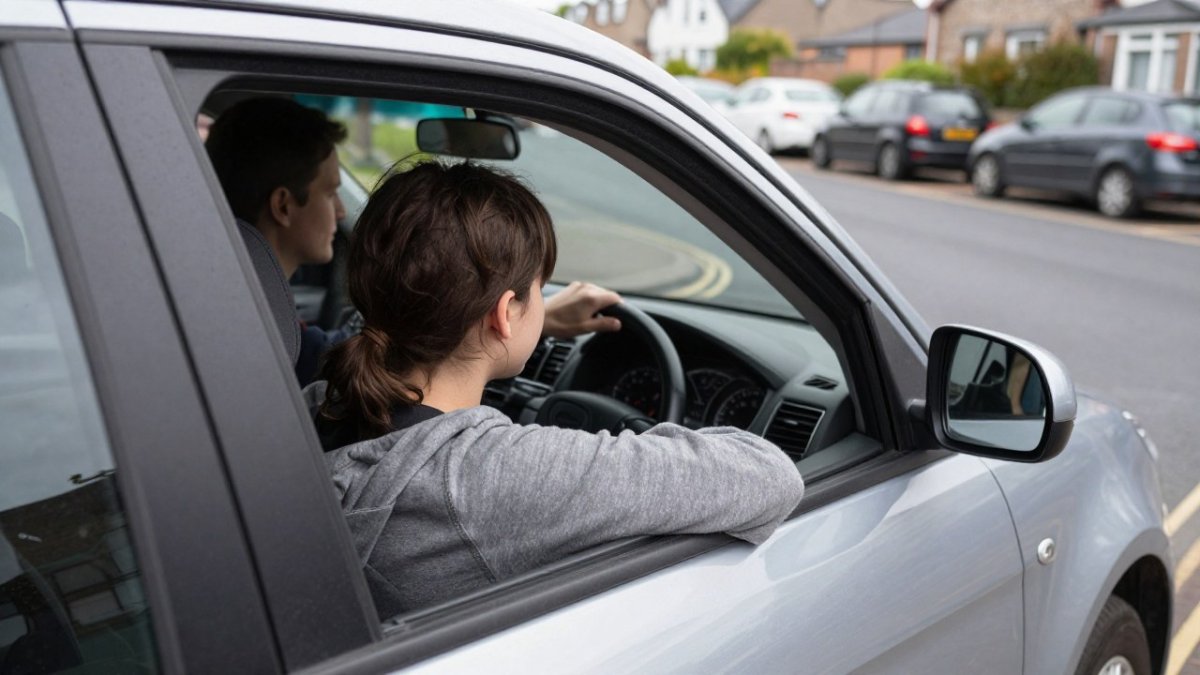
Learners who want a clear plan for structured practice can follow a step-by-step guide to structured driving lessons.
Here is the sequence examiners expect, in order.
| Step | What to do |
|---|---|
| 1 | Pull over on the left and stop beside the kerb |
| 2 | Check surroundings with mirrors and an all-around check |
| 3 | Move off slowly in first gear, steering with full lock right |
| 4 | Stop before the kerb on the opposite side |
| 5 | Select reverse and check the left blind spot |
| 6 | Reverse slowly across the road, steering left, until facing the other way |
| 7 | Drive forward to complete the turn and straighten up |
Three-Point Turn Observations: What Examiners Look For
Examiners watch for a complete observation routine before every movement, and a missed check is a serious fault. With three movements, there are three full observation cycles.
-
Check the interior mirror, then the right door mirror.
-
Signal right if it helps other road users.
-
Look over your right shoulder into the blind spot.
-
Look ahead and across for oncoming traffic, pedestrians, cyclists and anything emerging from driveways or junctions.
-
Move only when the road is clear both ways.
-
Check the interior mirror and both door mirrors.
-
Look over your left shoulder through the rear window, the blind spot that catches most learners.
-
Look all around once more, because the road behind has changed while you were stationary.
-
Reverse only when certain nothing is approaching.
-
Check the interior mirror and right door mirror.
-
Look over your right shoulder.
-
Look ahead for the new direction of travel and anything that appeared while reversing.
A useful habit is to say the checks out loud under your breath, mirror, shoulder, ahead, so the routine becomes automatic.
- If a vehicle approaches during the first movement, stop before the opposite kerb and wait for it to pass.
- If a pedestrian steps out while you are reversing, stop immediately and stay stopped until they are clear.
- If a cyclist is filtering past on your right, hold position and let them through rather than trying to complete the turn around them.
- If the road becomes busy enough that you cannot complete a movement safely, it is acceptable to pause, and if necessary to abandon the manoeuvre and drive on to a quieter location. Examiners assess safety, not stubbornness.
The official guidance in The Highway Code sets out the observation and safety rules every learner driver must follow, and your instructor in Aberdeen will build these checks into every practice session so they become second nature.
For a full plan covering examiner expectations, see how to pass your Aberdeen driving test first time.
Three-Point Turn Common Mistakes and How to Fix Them
The three-point turn common mistakes are predictable, and each has a concrete fix you can practise.
Rushing the steering. Apply full lock smoothly and progressively, not jerked. Fix it by slowing the car further before you turn the wheel.
Skipping the blind spot. The left-shoulder check before reversing is the one learners forget most. Build it into your routine before you select reverse, not after.
Poor clutch control. In a manual car, keep the clutch at the biting point and let the car creep. Practise clutch control on a flat, quiet road before adding the turn.
Hitting or mounting the kerb. This usually comes from misjudging road width on the first movement.
- If you finish the reverse still facing the wrong way, select first gear and make an additional forward movement, then reverse again if needed. A four- or five-point turn completed safely is better than a rushed three-point turn that clips a kerb.
- If you are too close to the kerb on the opposite side, stop, select reverse, and straighten up before continuing.
- If you have stalled, restart the engine, reapply the handbrake if needed, and repeat the full observation routine before moving.
- If you have lost track of your position, stop, take a breath, and re-check your mirrors and surroundings before deciding the next movement.
Automatic versus manual: in an automatic there is no clutch to manage, so focus shifts to steering, observation and smooth braking.
Adapting to the road: on a narrow road, expect more than three movements and plan for it. On a slope, use the handbrake to hold the car between movements. In a larger vehicle, allow more space on the first movement and check mirrors more often, because blind spots are bigger.
The turn in the road manoeuvre rewards patience. Slow, deliberate movements beat fast, jerky ones, and a calm recovery from a misjudged movement is exactly what an examiner wants to see.
For broader test strategies, read tips for passing your driving test first time.
Nervous learners in Aberdeen often worry about busy junctions and roundabouts. M&A Drive School offers patient, systematic instruction with manual and automatic lessons, plus reflection journals that build real understanding.
Frequently Asked Questions
Is the three-point turn still part of the UK driving test?
Yes. The turn in the road remains one of the manoeuvres an examiner can ask you to complete during the practical test. You will not be asked to perform every manoeuvre, but you should be ready for any of them. The examiner is looking for safe observation, accurate control and awareness of other road users throughout, not just a clean finish. Practising the turn in the road driving manoeuvre regularly with your instructor in Aberdeen keeps it familiar.
What observations should you make during a three-point turn?
Three-point turn observations must cover every movement. Before moving off, check mirrors and blind spots in both directions. As you move forward, look across the road for oncoming traffic. Before reversing, check all around again, including over your left shoulder. Before the final forward movement, repeat the checks. Examiners want to see you turn your head and use the mirrors, not just glance. Missing a blind spot check is one of the three-point turn common mistakes that can lead to a fault.
Can you fail a driving test for a three-point turn?
Yes, you can fail if you make a serious or dangerous fault during the manoeuvre. Examples include moving off without checking for traffic, mounting the kerb, or failing to give way to a pedestrian or cyclist. A single major fault is enough to fail. However, small steering corrections or an extra shunt are usually recorded as minor faults, not failures. Your instructor will help you understand the difference during practice in Aberdeen.